
2 September 2026
By Roger Kennedy
roger@TheCork.ie
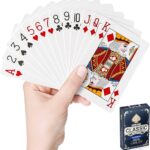
Some games belong to a particular machine or moment. Solitaire has travelled through many of them. It has been dealt on kitchen tables, demonstrated by relatives, included with early home computers and reopened on phones during quiet minutes. In Ireland, many people still recognise the wider family of solo card games by the familiar name patience. A modern browser version such as PlaySolitaire changes the surface, but not the central pleasure. Cards begin in disorder, the rules provide a path and a series of small decisions gradually brings the layout into shape.
A Game Carried in Memory
Traditional card games survive because people can carry them without carrying instructions. Once the basic pattern has been learned, a standard deck is enough to recreate the experience almost anywhere.
Solitaire is especially portable because it does not depend on gathering a group. One person can deal a hand, test a strategy and begin again. That independence helped the game pass between generations. A parent or grandparent could demonstrate the first few moves, then leave the learner to discover the rhythm alone.
From the Table to the Screen
Moving solitaire onto a computer did more than save space. The screen could arrange the cards, enforce the rules and handle the repetitive work of shuffling and dealing. That made the game easier to start for people who had never learned it with a physical deck.
The digital version also reached players in ordinary settings. It could fill a few minutes at a desk or offer a familiar pause at home. The experience remained recognisable because the important parts were not the paper cards. They were the visible order, the hidden information and the satisfaction of revealing a useful move.
One Player Does Not Mean No Challenge
Solitaire has no opponent making decisions across the table, but it still creates tension. Every move changes what will be possible later. Exposing a hidden card may open the layout, while moving a sequence too soon can block another route.
The challenge is gentle because the consequences stay inside the game. There is no money at stake, no ranking to defend and no teammate to disappoint. The player can think carefully, experiment and accept an unlucky deal without carrying the result into the rest of the day.
The Rules Are Visible
Many modern games begin with menus, character choices and tutorials. Solitaire begins with the cards already in front of the player. The layout itself explains much of the task. Empty spaces invite use, face down cards promise new information and completed foundations show progress.
This visible design makes the game approachable across age groups. A returning player can rely on memory, while a newcomer can understand the pattern through a few rounds. The game rewards attention without demanding specialist knowledge or fast reactions.
A Finite Form of Digital Entertainment
Digital leisure often has no natural edge. A feed continues, another video loads and the next notification interrupts the last one. A solitaire hand has a clear boundary. It begins, develops and ends.
That finite shape is one reason the game still suits short breaks. A round can provide a focused activity without becoming an open ended commitment. The player knows when the session is complete and can return to another task without feeling that a larger story has been abandoned.
What Has Stayed the Same
The technology around solitaire has changed repeatedly, but the basic rhythm has not. The player sorts, reveals, plans and adapts. Luck determines the starting position, while judgement shapes what happens next.
That balance explains why the game has never needed a dramatic reinvention. Browser play makes access quicker and removes the practical work, yet the appeal remains connected to the same simple pattern that worked with a physical deck.
Solitaire crossed generations because it is both familiar and flexible. It can be taught at a table, discovered on a computer or opened in a browser, and still feel like the same game. Few forms of digital entertainment can make that claim. The screen may change, but the quiet satisfaction of bringing order to the cards continues to feel complete.