
27 September 2026
By Valerie Ryan
valerie@TheCork.ie
Did you know you cannot just buy a Rolex same-day, you must be added to a waiting list. So if a fake watch looks almost identical, why spend thousands on the genuine article? especially if the fake can be had more quickly.
There are plenty of answers — quality, durability, servicing, resale value and provenance among them. But there is another rather fundamental consideration: does the watch actually keep time properly?
A genuine Rolex is a mechanical instrument containing hundreds of tiny components working together without a battery. Like all mechanical watches, it is not expected to achieve the absolute precision of a modern quartz watch.
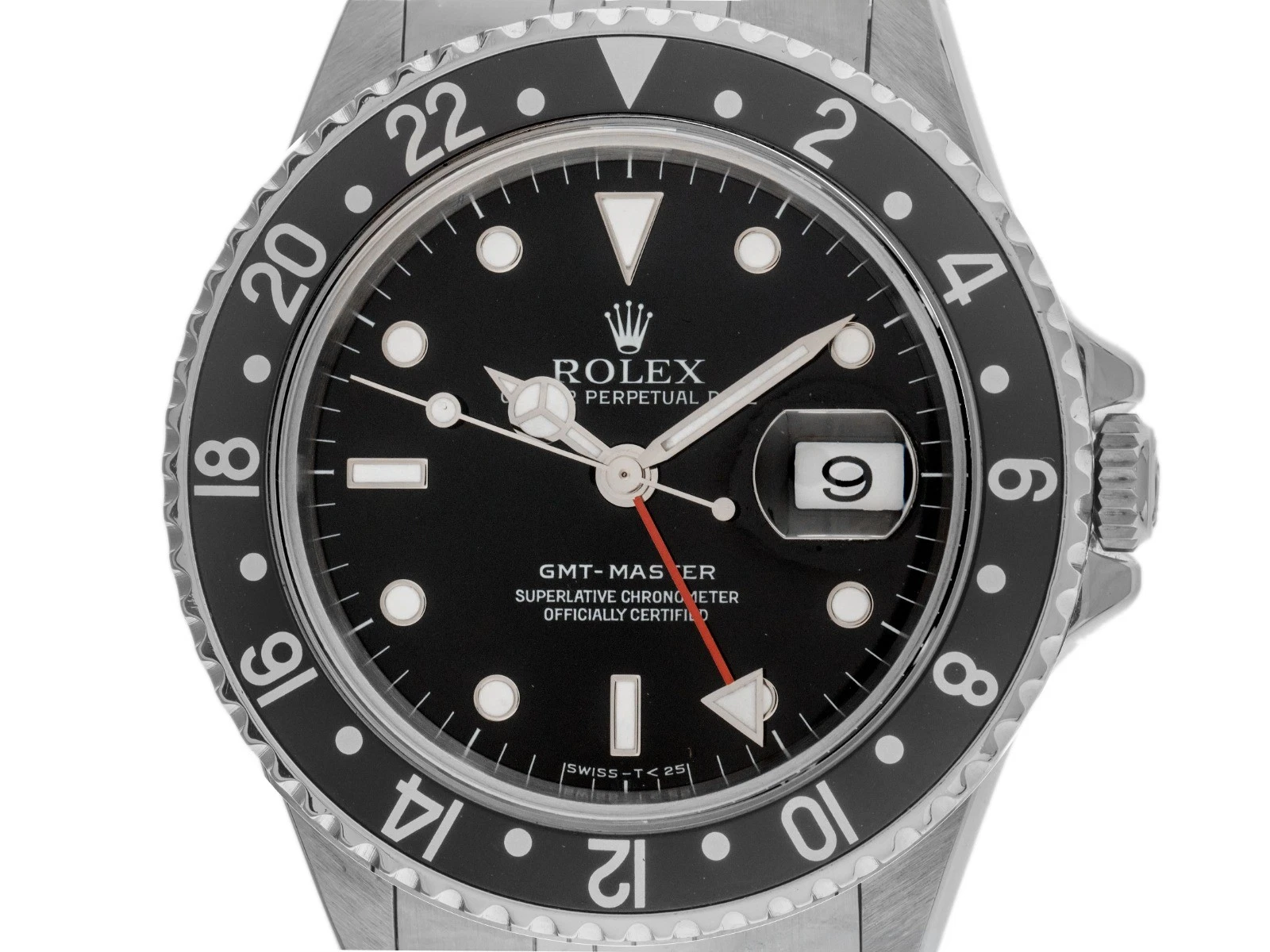
In fact, even a genuine mechanical Rolex can gain or lose seconds each day. Rolex specifies accuracy standards for its modern watches, and the exact performance depends on the movement, condition, age and circumstances in which the watch is worn.
That is quite different from some inexpensive counterfeit watches, where the quality of the movement can be considerably less predictable.
When the imitation doesn’t quite imitate the time
The irony of a fake Rolex is that it can sometimes look remarkably convincing from across the room while being considerably less convincing when you actually use it as a watch.
Cheap or poorly regulated mechanical movements may gain or lose significant amounts of time. Some can be affected noticeably by position, temperature, movement and how fully wound the watch is.
And there are some entertaining examples.
I know of one supposed Rolex where the hands effectively became stuck at the 15-second mark. It was certainly a memorable way of demonstrating that reproducing the appearance of a Rolex is rather easier than reproducing the reliability of the mechanism inside one.
That distinction matters because the attraction of a mechanical watch is not simply what is printed on the dial. The fascination lies underneath it.
The movement is where the difference really matters
A genuine Rolex movement is manufactured, assembled, tested and regulated to demanding standards. The company has invested decades in developing its movements and the manufacturing processes behind them.
A counterfeit manufacturer, by contrast, may concentrate heavily on making the watch visually convincing while using a cheaper movement underneath.
That can mean differences in:
- accuracy;
- power reserve;
- winding performance;
- resistance to wear;
- reliability;
- finishing and construction;
- availability and quality of servicing.
A fake may therefore pass a visual inspection but reveal itself through its behaviour.
A genuine Rolex is also designed to last
Another advantage of buying genuine is that the watch can be properly serviced using the manufacturer’s established servicing network and appropriate replacement components.
A mechanical watch is a machine, and machines wear. Oils degrade, components can wear and seals can deteriorate. A genuine Rolex can be maintained as a mechanical instrument rather than simply being replaced when the movement eventually fails.
There is also the question of water resistance. A genuine watch has been manufactured and tested as a complete system. With a counterfeit, even if the case appears identical, there is no equivalent assurance that its water resistance, seals and construction meet the same standards.
You are buying more than the name on the dial
Of course, nobody needs a Rolex to know the time.
A €20 quartz watch can be considerably more accurate than a luxury mechanical watch. The point of a Rolex is therefore not simply that it tells the time.
It is the combination of engineering, mechanical craftsmanship, materials, history, design and longevity.
That is also why a fake can miss the point entirely.
A counterfeit can reproduce the look of a Rolex. It may even reproduce the logo, markings and general appearance remarkably closely.
But copying the appearance of a mechanical watch is not the same as reproducing the engineering that makes the genuine watch tick.
And sometimes, the simplest test of all is to look at the hands and ask one very basic question:
Are they actually keeping time?