
10 November 2026
By Roger Kennedy
roger@TheCork.ie
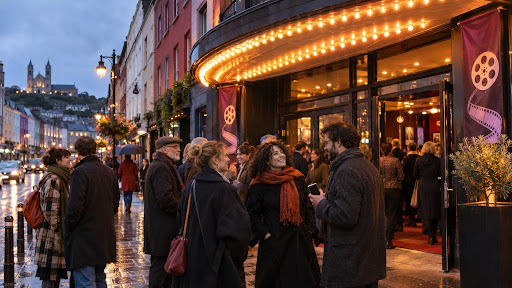
A cinema festival begins well before the lights go down. There are screenings to compare, friends to coordinate and the small logistical puzzle of getting from one venue to another. In Cork, the phone in an audience member’s pocket has become part of that experience, even though the main attraction still deserves a much larger screen.
The same device carries very different kinds of entertainment once the evening is over. Casino Kings’ Ireland mobile casino guide, for example, describes browser access for phone and tablet users. Film viewing, listening and real-money gaming have separate purposes and rules, but their presence on a shared device shows how much of the leisure day now travels with its owner.
A city built around screenings
Cork Film Festival’s 71st edition runs from 12 to 22 November 2026. An eleven-day programme creates a particular kind of city rhythm: a screening becomes the centre of an afternoon, a discussion continues over food, and a film chosen almost on impulse can become the one everyone remembers.
A phone helps with the surrounding decisions. A synopsis can settle an argument about which film to see. A message can tell a late-running friend where to meet. A saved booking confirmation can spare someone a search through an overflowing inbox at the cinema door. None of those actions replaces the pleasure of attending together.
That is a more interesting role for mobile technology than the familiar prediction that every new screen will displace the previous one. The small screen can bring people to a physical event, help them make use of it and then carry the conversation afterwards. Its usefulness lies partly in knowing when it should disappear into a pocket.
An ordinary part of the audience’s equipment
ComReg’s mobile survey, published in March 2026, found that 93% of people with a handset owned a smartphone. The finding helps explain why mobile access is now a basic consideration for audience-facing services. A festival visitor may not have a laptop with them, but is very likely to have a connected screen to hand.
That does not make every task suitable for the smallest possible display. Reading a long programme essay is different from checking a start time. Watching a film is different from viewing its trailer. Good mobile experiences respect those differences instead of assuming that fitting everything onto one device makes every experience equivalent.
For visitors, a little preparation still makes the day easier. Saving the details of a booking before leaving home reduces the need to hunt for a connection. Checking venue locations in advance leaves more room for the enjoyable decisions, including whether there is time for another screening or an unhurried meal.
Cork’s appeal as a festival setting comes from the city around the programme as well as the programme itself. Streets, cafes and foyers give an event its atmosphere. The phone can help people find their way between them, but it cannot reproduce the feeling of emerging from a cinema into a conversation already under way.
As November’s screenings draw audiences together, the most successful use of the second screen may be the least conspicuous. It gets people to the right place with the right information, then leaves the film and the city to provide the memorable part.