
23 November 2026
By Elaine Murphy
Elaine@TheCork.ie
The Corkman who built New York’s first subway: From Fermoy to the streets of Manhattan
He left Ireland as a four-year-old during the Great Famine. More than half a century later, John B. McDonald would oversee one of the greatest engineering projects in American history, transforming transport in New York City forever.
Beneath the busy streets of Manhattan lies a remarkable connection to County Cork.
Millions of people use New York City’s subway system every day, travelling through hundreds of stations and across an enormous network of underground railway lines. Yet the story of its beginnings has a distinctly Irish connection.
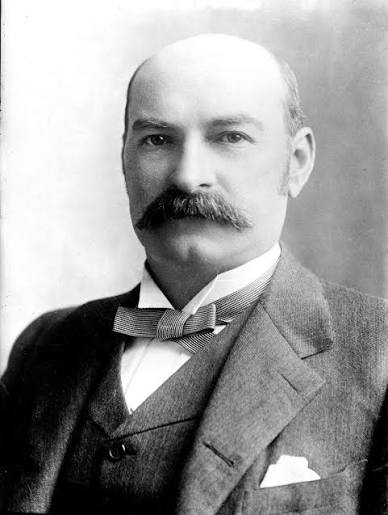
The man who secured the contract to build New York’s first subway was John B. McDonald, an Irish emigrant whose roots were in Fermoy, County Cork.
His journey from Ireland to the heart of America’s construction industry is an extraordinary story of ambition, determination and business success.
Born in 1844, McDonald left Ireland for America at just four years of age, during the Great Famine. Like countless other Irish families, his family crossed the Atlantic in search of a better life.
Few could have imagined that the young Cork emigrant would eventually become responsible for delivering one of the most ambitious infrastructure projects of the early twentieth century.
From humble beginnings to major construction projects
McDonald’s early career began in the American construction industry, where he developed practical experience working on major infrastructure schemes.
One of his earliest significant roles involved work on the Boyd Corners Reservoir in Putnam County, New York.
He subsequently became involved in railway construction, including the Fourth Avenue Tunnel in New York, which began in 1872.
By the 1880s, McDonald had established himself as an independent construction contractor.
In 1889, he secured a significant contract to construct the Howard Street Tunnel for the Baltimore and Ohio Railroad.
His reputation continued to grow, and he became increasingly involved in the major commercial and political networks of New York.
He also developed connections with Tammany Hall, the powerful Democratic political organisation that dominated New York City politics for decades and had strong links to the city’s Irish-American community.
These connections would become particularly relevant when New York began planning its first underground railway.
The $35 million opportunity
By the end of the nineteenth century, New York was experiencing extraordinary population growth.
Its streets were becoming increasingly congested, and the existing transport infrastructure was struggling to cope with demand.
The city needed a revolutionary solution.
Plans for an underground railway gathered momentum following the passage of the Rapid Transit Act in 1894.
The project was enormous, requiring a contractor capable of managing a complex engineering operation beneath one of the busiest urban environments in the world.
McDonald submitted a bid of $35 million to undertake the construction.
A rival contractor, Andrew Onderdonk, submitted a higher bid of $39 million but failed to provide the required $5 million security bond.
McDonald consequently secured the contract.
The value of the undertaking was extraordinary for its time, equivalent to well over a billion dollars in today’s money, depending on the inflation measure used.
Working with financier August Belmont Jr. and the Interborough Rapid Transit Company, McDonald took responsibility for delivering the construction of New York’s first subway.
It would become the defining achievement of his career.
Building a railway beneath Manhattan
Construction began in 1900, with an ambitious deadline of approximately four years.
The original line covered around nine miles, running from City Hall in Lower Manhattan northwards through the city to 145th Street in Harlem.
It passed through some of Manhattan’s busiest locations, including Times Square.
Building an underground railway beneath an established city was an enormous challenge.
Construction crews had to contend with existing water pipes, sewers, electrical infrastructure and the foundations of buildings. Excavation work also threatened to disrupt businesses and everyday life above ground.
Much of the construction used a technique known as ‘cut and cover’.
Workers excavated the streets from above, constructed the railway tunnels and then covered them over again.
The process was labour-intensive and frequently disruptive.
Dynamite was used at night to break up sections of the streets, while workers spent the daytime clearing rubble and excavated material. In some cases, mule-drawn carts were used to transport debris.
The scale of the operation was immense, involving thousands of workers and vast quantities of building materials.
It was also dangerous work.
Sixteen workers lost their lives during the construction period, with tunnel collapses and other accidents among the hazards faced by the workforce.
Despite the difficulties, labour disputes and engineering challenges, McDonald delivered the project within the agreed timeframe.
150,000 passengers on the first day
On October 27, 1904, New York’s first underground subway officially opened to the public.
It was a landmark occasion.
Approximately 150,000 passengers used the new railway on its opening day, paying just five cents for a journey.
For New Yorkers, it represented a completely new way of travelling around their rapidly expanding city.
The subway allowed large numbers of people to move quickly beneath the streets, avoiding the congestion that had increasingly characterised life above ground.
The original network was subsequently expanded, reaching approximately 23.8 miles within a few years.
Further development into Brooklyn and other parts of the city would eventually create the extensive transport network recognised around the world today.
The opening of the subway marked a turning point in New York’s development, helping facilitate the growth of the modern metropolis.
And a man who had left Fermoy as a small child had played a central role in making it happen.
A career that could have included the Panama Canal
Following the completion of the subway, McDonald continued to attract attention within America’s construction industry.
In 1905, Thomas F. Ryan, a prominent businessman associated with the Metropolitan Street Railway, hired him away from the Interborough Rapid Transit Company.
There were expectations that McDonald might become involved in further major railway developments.
However, disputes over property rights and proposed routes prevented some of those projects from progressing.
He was also considered for possible involvement in the construction of the Panama Canal, although that opportunity did not materialise.
Despite his continuing reputation, McDonald never built another New York subway line.
His name would forever remain associated with the original project.
An Irishman’s remarkable legacy
John B. McDonald died on March 17, 1911, aged 66.
There is a particularly striking coincidence in the date: the Cork-born emigrant died on St Patrick’s Day.
His death was marked in New York, where his contribution to the city’s development was recognised.
A contemporary newspaper tribute reportedly highlighted the fact that McDonald had achieved so much through practical experience rather than extensive formal scientific education.
His own description of the enormous engineering undertaking was remarkably modest. He reportedly compared the construction of the subway to building a series of cellars joined together.
There was also a remarkable gesture of recognition following his death. The entire New York subway system was reportedly stopped for two minutes in his memory.
From Fermoy to one of the world’s greatest cities
Today, New York’s subway is one of the world’s largest and busiest urban transport systems.
It has become inseparable from the identity of the city, carrying millions of residents and visitors through Manhattan, Brooklyn, Queens and the Bronx.
Yet the story of the man who helped build its foundations remains relatively unknown in Ireland.
John B. McDonald left County Cork as a four-year-old child during the Great Famine. He went on to build a successful career in America and became responsible for overseeing an engineering project that fundamentally changed the way one of the world’s greatest cities operated.
His life is a powerful example of the contribution Irish emigrants made to the development of the United States.
From railways and tunnels to bridges, roads and major public infrastructure, Irish men and women helped build the modern America.
And among those remarkable stories is that of a young emigrant from Fermoy whose legacy can still be found beneath the streets of Manhattan more than a century after his death.
It is a remarkable piece of Cork history, and one that deserves to be better known.