
28 April 2026
By Roger Kennedy
roger@TheCork.ie
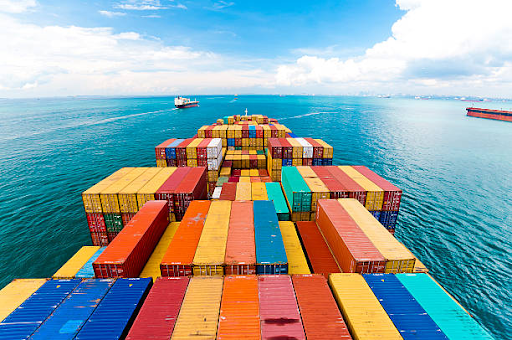
Ireland performs far beyond expectations in international trade. In 2024, Ireland ranked as the 24th largest economy in the world by GDP and the 29th largest exporter globally, out of 226 countries. For a relatively small nation, those are impressive numbers, and they reflect just how dependent Irish businesses are on getting goods in and out of the country efficiently.
In January 2026, Ireland’s top export destinations included the United States (€3.5B), the United Kingdom (€2.17B), the Netherlands (€2.07B), Germany (€1.27B), and Belgium (€989M). On the import side, goods came primarily from the UK, the US, China, and Germany. Managing trade flows across that many markets is no small task, and for many Irish businesses, working with an Ireland freight forwarder is what keeps it all running smoothly without the pressure of handling logistics in-house.
What Does a Freight Forwarder Do?
A freight forwarder takes care of the logistics involved in moving your goods from one country to another. Instead of dealing with carriers, customs authorities, and documentation separately, you work with a single point of contact who coordinates everything on your behalf.
In practice, that means arranging the right transport for your shipment, preparing the paperwork, handling customs declarations, and making sure your goods arrive on time and in good shape.
Road Freight Between Ireland and the UK
For businesses moving goods between Ireland and Great Britain, road freight is the standard approach. Trucks travel via direct ferry routes or the UK land bridge, and a good freight forwarder will choose the most efficient option based on your cargo, timings, and budget.
Road freight works well for all sizes of shipment. For larger loads, an FTL (Full Truck Load) means the entire truck is dedicated to your goods. For smaller shipments, LTL (Less Than Truck Load) or groupage is the more cost-effective option. With groupage, your goods share space with other businesses’ cargo, which keeps costs down without sacrificing reliability.
Getting Customs Right
Since Brexit, goods moving between Ireland (an EU member state) and Great Britain require customs declarations in both directions. That means more paperwork, more compliance requirements, and more opportunity for costly mistakes if you are not sure what you are doing.
A freight forwarder who handles customs as part of the service is a real asset here. They make sure import and export declarations are filed correctly, that commodity codes are accurate, and that your goods are not held up unnecessarily at the border. Errors at this stage can mean delays, fines, or goods being stuck in a port, none of which is good for your customers or your reputation.
The Business Case for Using a Freight Forwarder
The practical reason most businesses use a freight forwarder is simple: it saves time and money.
Freight forwarders have established relationships with carriers and can negotiate better rates than most individual businesses could secure on their own. They also bring day-to-day experience of routes, regulations, and potential pitfalls, which means fewer expensive surprises.
For small and medium-sized Irish businesses in particular, having an experienced partner in your corner means you can ship with confidence, whether you are moving a few pallets or a full trailer load.
What to Look for in a Freight Forwarder
Not all freight forwarders offer the same level of service. A few things worth checking before you commit:
- BIFA membership: The British International Freight Association sets professional standards for the industry. A BIFA member gives you a baseline level of assurance about how your shipment will be handled.
- Customs expertise: Make sure customs clearance is included as part of the service, not bolted on as an afterthought. Post-Brexit, this is non-negotiable for the Ireland-UK route.
- Transparent pricing: You want a clear, all-in quote with no hidden extras. The cheapest rate on paper is not always the cheapest once everything is accounted for.
- Relevant experience: The Ireland-UK trade lane has its own quirks, particularly since Brexit. A freight forwarder with specific experience on this route will be better placed to handle issues when they arise.
Getting Started
If your business ships goods between Ireland and the UK, speaking to a freight forwarder is a sensible first step. A quick conversation about your typical shipments, volumes, and timescales is usually all it takes to get a quote and work out the best approach for your needs.
The right freight forwarder will not just move your goods. They will make the whole process more straightforward, more predictable, and more cost-effective.