
11 May 2026
By Roger Kennedy
roger@TheCork.ie
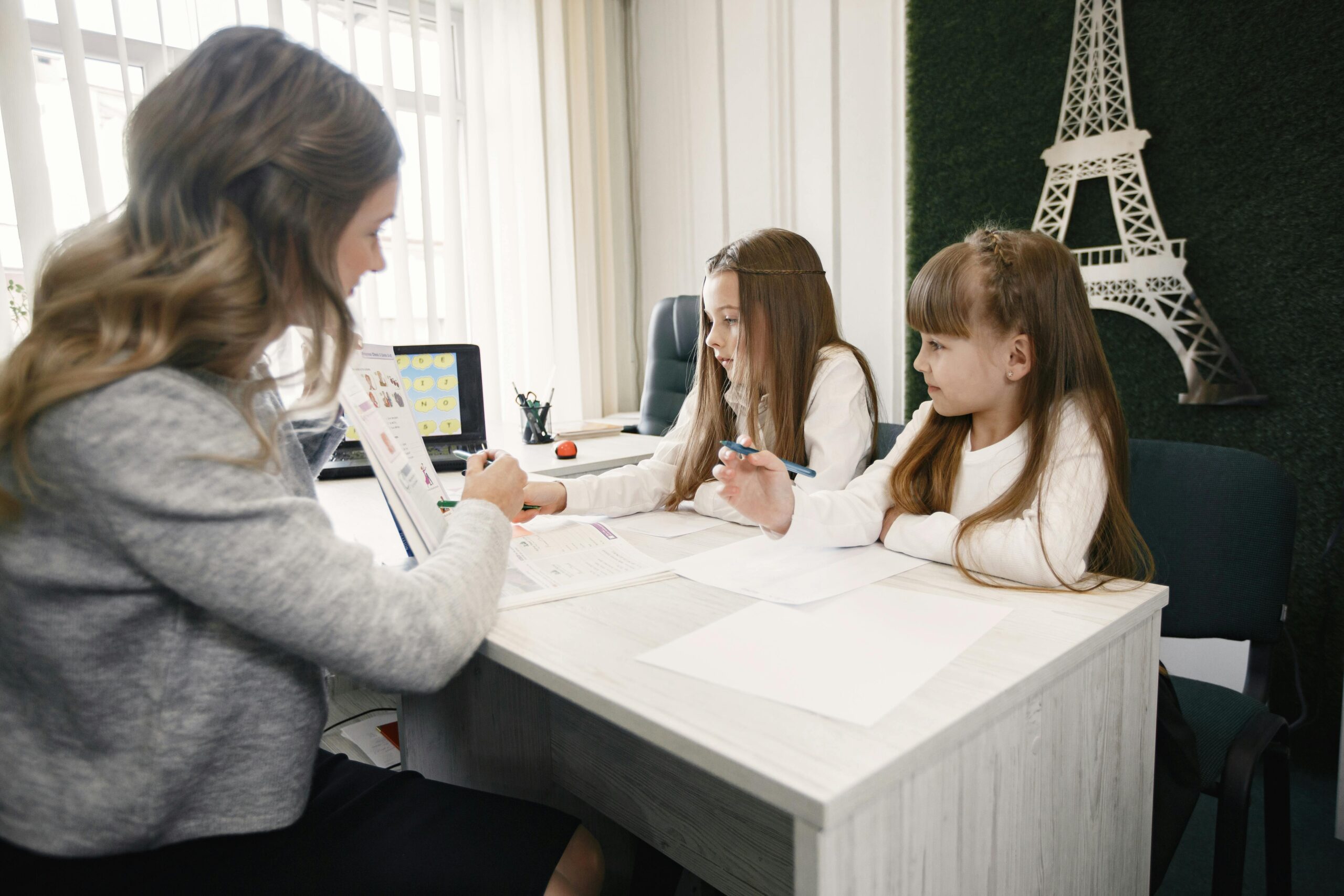
Saturday mornings. A kitchen table. A patient teacher explaining quadratic equations for the third time. For decades, this was the Irish grind — and families paid handsomely for it.
Ireland spends more on private tutoring than almost any other EU country. A survey by the Irish League of Credit Unions found that back-to-school costs, including grinds, regularly exceed €1,000 per child annually. That’s a serious line in any household budget.
https://www.pexels.com/photo/7156103/
What AI Tutoring Actually Looks Like
Forget the sci-fi image. AI tutoring today is apps, chatbots, and adaptive learning platforms — available at 2 a.m., no appointment needed.
Tools like Khan Academy’s Khanmigo, Socratic by Google, and platforms like Synthesis are already in Irish homes. They adjust difficulty in real time, explain concepts multiple ways, and never lose patience. A student stuck on photosynthesis at midnight no longer has to wait until Thursday’s grind session.
The Numbers Are Hard to Ignore
Traditional grinds in Ireland typically cost between €40 and €80 per hour. Some specialists in Leaving Cert subjects charge more.
Compare that to AI platforms, many of which operate on subscriptions ranging from free to €15 per month. Over an academic year, that gap becomes enormous. For a family paying €60 weekly for one grind session, switching even partially to AI tools could save over €2,000.
Where AI Genuinely Shines
Consistency is AI’s superpower. It doesn’t cancel because of a cold.
For subjects with clear right-or-wrong answers — maths, science, grammar — AI tutors perform remarkably well. Studies from Stanford and the University of Edinburgh suggest AI-assisted learning can improve test scores by 20–30% when students engage regularly. That’s not a small number.
Where Digital Approach and AI Win?
Here’s where things get practical. One quiet revolution in student homework is the rise of the math solver—an AI tool that walks students step by step through problems rather than simply handing them an answer.
Good math solvers show working skills, explain reasoning, and let students retry at their own pace. With AI math help, a child can achieve more. And the price is also important: a math helper costs a couple of dollars, while tutoring starts at €250 per month.
Where Human Tutors Still Win
Motivation. Accountability. The raised eyebrow when a student is clearly guessing.
A skilled grind teacher does something AI cannot yet replicate: they read the room. They notice when a student is anxious before an exam, when confidence is crumbling, when a slightly different explanation — said warmly, in person — clicks everything into place. That human element has real value. Especially in the pressure cooker of the Leaving Cert season.
The Leaving Cert Factor
Ireland’s Leaving Certificate isn’t just an exam. It’s a gatekeeper.
Points pressure is real, and parents know it. A single grade difference in one subject can change a CAO offer entirely. For that reason, many families are unlikely to abandon human grinds completely — regardless of cost. The stakes feel too high to experiment. And honestly? That’s a fair position.
A Hybrid Approach Is Emerging
Smart families aren’t choosing one or the other. They’re layering both.
AI handles daily practice, homework support, and revision. A human tutor steps in for exam technique, essay feedback, and motivational support. This combination is gaining traction — and it’s a textbook example of applying shopping strategies to education: don’t pay for what you can get cheaper elsewhere, but don’t cut corners where it genuinely matters.
What Schools Are Saying
Irish secondary schools are cautiously curious. Some teachers quietly recommend AI tools; others worry students are using them to avoid thinking altogether.
The Department of Education has not issued formal guidance on AI tutoring tools as of 2024. That gap — policy lagging behind practice — is typical. Students, meanwhile, have moved on. They’re already using these tools, guidance or not.
The Cost-Benefit Reality
Here’s the honest summary. For most subjects, most of the time, AI tutoring is good enough — and dramatically cheaper.
For high-stakes moments, complex essay subjects, or students who simply struggle with self-discipline, human grinds remain valuable. The mistake is treating this as binary. Families willing to be flexible, to look for better deals across the board, and to combine tools intelligently will get the best outcomes — academically and financially.
So, Are Grinds Worth It?
Sometimes. Less often than before.
The grind industry in Ireland is not going away. But its dominance is being challenged for the first time — not by another tutoring agency, but by software running on a phone in a teenager’s pocket. Families who think critically about where every euro goes, who apply the same smart shopping mindset to education that they apply to groceries or insurance, are already making the shift. The rest will follow.
Final Thought
Education spending in Ireland has always reflected anxiety as much as strategy. Parents pay for grinds partly because it feels like doing everything possible.
AI doesn’t carry that emotional weight — yet. But as results speak for themselves, and as costs become impossible to ignore, the question is shifting. It’s no longer “Can AI replace a grind teacher?” It’s “For this subject, this week, which one actually makes sense?” That’s a better question. And it deserves a clear-eyed answer.