
22 December 2025
By Roger Kennedy
roger@TheCork.ie
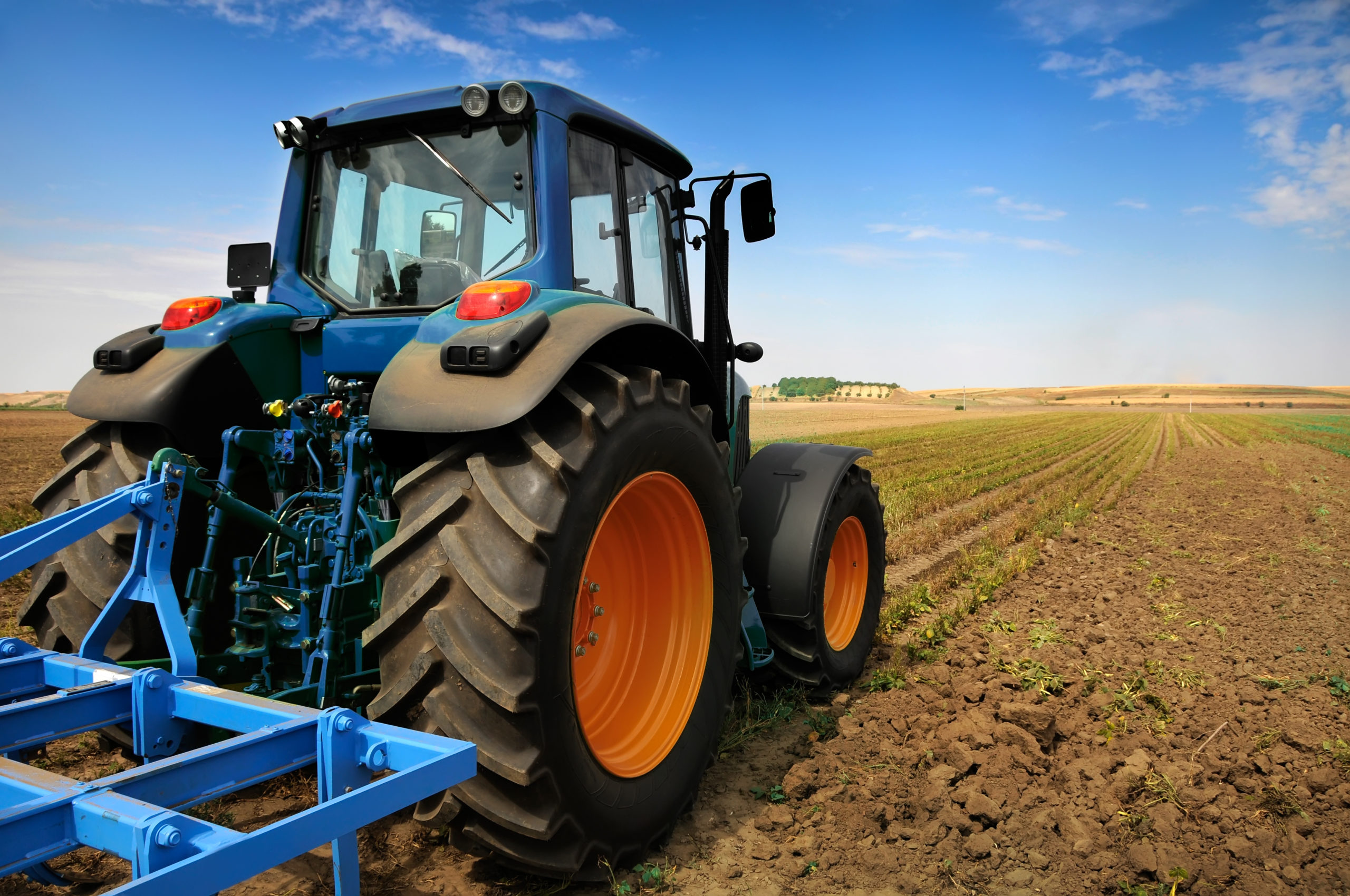
When the French government appealed for a Christmas truce with protesting farmers, it was an attempt to cool tensions rather than resolve them entirely. Tractors blocking roads, manure dumped outside public buildings, and placards rejecting the EU-Mercosur trade deal are not seasonal excesses, but reflect a deeper frustration with a food and agriculture system that many farmers no longer recognise as workable or fair.
The immediate grievances are clear. Farmers are angered by the handling of outbreaks of cattle lumpy skin disease, particularly the policy of culling entire herds when infection is detected. They are equally alarmed by the prospect of a revived EU-Mercosur agreement, which they fear would expose them to imports produced under conditions they are not allowed to replicate. But these protests are not only about disease control or trade. They are about a growing disconnect between agricultural policy, consumer-facing regulation, and the economic reality of producing food in Europe.
Standards without reciprocity
European farmers operate under some of the world’s most demanding regulatory frameworks. Environmental constraints, animal welfare rules, limits on veterinary treatments, and traceability requirements are now standard. These rules carry real costs and shape every stage of agricultural production. The implicit contract, in farmers’ minds, has always been that such standards would be matched by protection against unfair competition.
That contract feels increasingly fragile. The Mercosur agreement has become a focal point because it symbolises a broader concern: that Europe is willing to prioritise trade volume and diplomatic momentum over genuine reciprocity. Safeguards proposed by the European Commission have done little to reassure farmers, who see thresholds set high enough to avoid being triggered and enforcement mechanisms that remain largely theoretical.
The result is a sense that standards are being imposed inwardly while flexibility is granted outwardly. This imbalance fuels resentment among agricultural communities and undermines confidence in the system.
When simplification replaces coherence
In recent years, this tension has also played out through the rocky introduction of Nutri-Score, a front-of-pack labelling system now displayed on many European food products and intended to guide consumers through an ostensibly simple colour-and-letter ranking.
Originally presented as a tool to improve transparency about what people are choosing to eat, Nutri-Score has become another layer of false simplification imposed on a complex food system. Its underlying methodology remains contested within the scientific community, relying on a limited set of nutrient thresholds that struggle to capture real dietary behaviour. By reducing foods to a single letter and colour based on narrow criteria, it overlooks how products are actually consumed by the average consumer, in what quantities, and how these foods fit within broader dietary patterns. In practice, this means that foods are judged in isolation, not as part of a real diet, creating the illusion of nutritional clarity where none truly exists.
For farmers and producers, meanwhile, the effect is cumulative, with the impact from these misguided labels compounding existing pressures from various sources. Traditional products that form part of regional diets are often penalised by scoring systems that reward reformulation and standardisation. Meanwhile, producers are asked to absorb the cost of adapting to labels that increasingly function as commercial gatekeepers, especially as large retailers push for their widespread adoption.
The backlash against Nutri-Score seen in Switzerland earlier this year is instructive. Major brands Nestlé, Migros, and Emmi all withdrew Nutri-Score, citing concerns over its credibility and relevance, acknowledging that overly reductive tools can mislead as much as they inform. Farmers watching these developments see another example of policy built around appearances rather than outcomes.
Farmers caught between policy silos
The protests sweeping France reveal how these policy strands intersect on the ground. Disease management, trade negotiations, labelling schemes, and environmental rules are often treated as separate dossiers in Brussels and Paris, but for farmers, they are cumulative pressures that land all at once.
A cattle breeder dealing with mandatory herd culling is also navigating rising feed costs, tighter veterinary rules, volatile markets, and uncertainty over future imports. A vegetable producer facing stricter environmental standards must also respond to retailer demands shaped by simplified nutrition metrics. None of these pressures exist in isolation.
The call for a Christmas truce highlights how stretched the relationship between government and farmers has become. Trust has eroded not because farmers resist change, but because change has been imposed without sufficient attention to coherence or proportionality.
Food diversity under strain
There is a wider consequence that deserves attention. Europe’s agricultural strength has never been based on mass uniformity. It lies in diversity: of regions, products, production methods, and processing traditions. Policies that favour standardisation, whether through trade incentives or simplified consumer metrics, gradually erode that diversity.
Small and medium-sized producers are the first to feel the impact. They lack the scale to absorb repeated regulatory adjustments or to reformulate products to satisfy shifting benchmarks. As margins tighten, consolidation accelerates. Farms disappear. Processing moves elsewhere. Local food ecosystems weaken.
This is not a theoretical risk. Eurostat data show that the number of farms in the EU has fallen sharply over the past two decades, while average farm size has increased. The trend reflects economic pressure as much as technological change. When policy consistently rewards volume and uniformity, diversity becomes a liability rather than an asset.
Affordability and legitimacy
Another tension runs through the protests: affordability. Food prices remain high relative to incomes, and consumers are adjusting accordingly. This matters because public support for high standards depends on food remaining accessible. When affordability erodes, legitimacy follows.
Simplified narratives that divide foods into “good” and “bad” categories, or producers into compliant and non-compliant camps, do little to address this reality. They risk alienating both farmers and consumers at a moment when social cohesion is already under strain.
Farmers understand that consumers need affordable, safe, and reliable food. Many are themselves involved in processing, preservation, and local supply chains that make this possible. They are not opposing progress. They are opposing a system that asks them to carry the burden of simplification while offering little security in return.
What the protests are really demanding
The scenes in Strasbourg and Le Touquet are not simply expressions of anger. They are demands for alignment. Farmers are asking policymakers to reconcile trade ambition with production standards, consumer information with dietary reality, and environmental goals with economic viability.
A Christmas truce may pause the demonstrations, but it will not resolve these structural contradictions. The questions raised by the protests will return in January, alongside debates on Mercosur, disease control, and the future of European agriculture.
If policymakers continue to rely on symbolic tools and fragmented responses, they should not be surprised when farmers return to the streets. If, instead, they take the protests as a signal that the system has lost balance, there is still an opportunity to rebuild trust.
That will require fewer slogans and more coherence. And an acceptance that food policy, like agriculture itself, cannot be reduced to a single label, a single deal, or a single season.
129.79e
ID 2409651