
19 March 2026
By Valerie Ryan
valerie@TheCork.ie
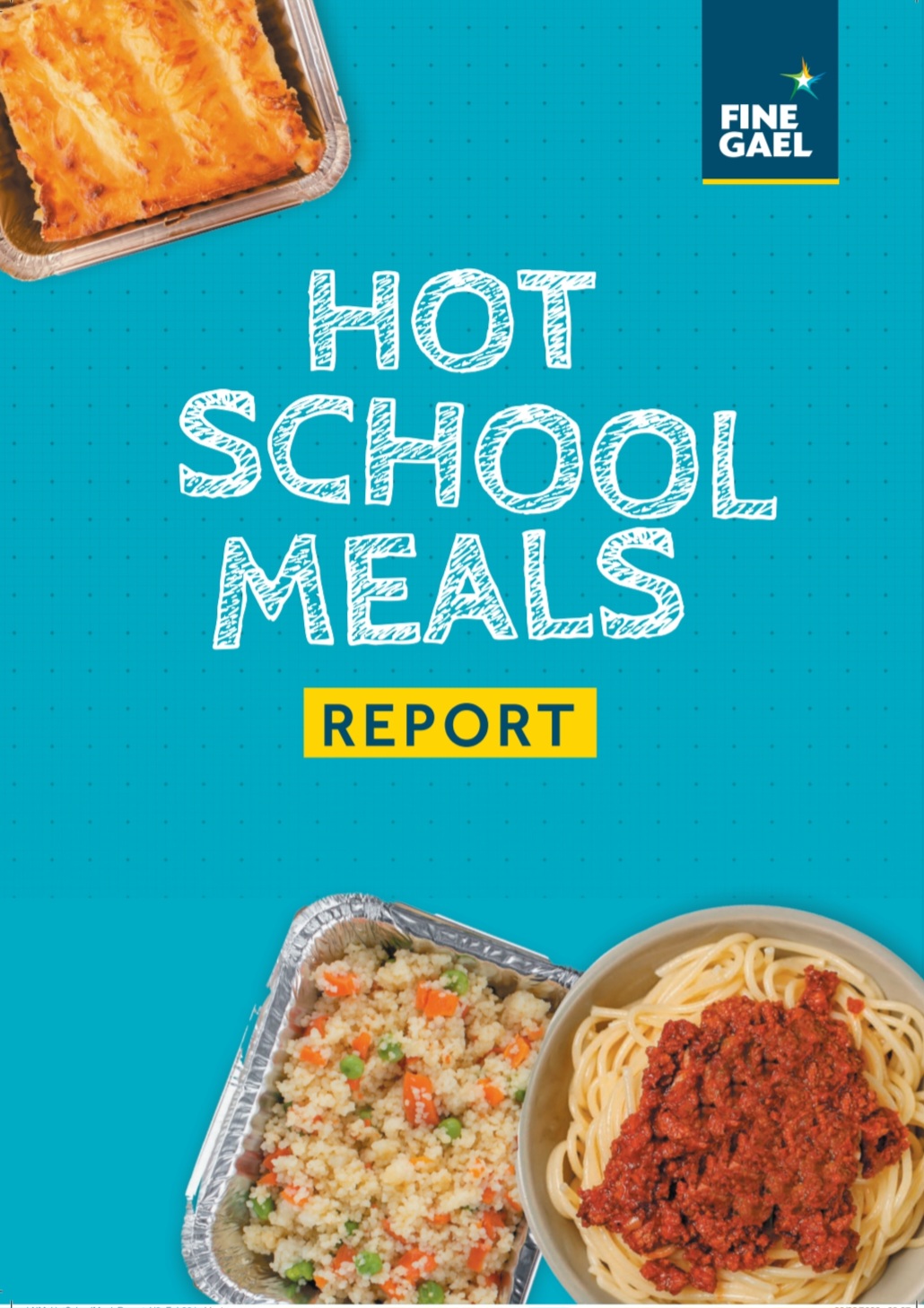
Read the full report here
The Hot School Meals Scheme is now available to every primary school in the country having begun as a pilot project in 2019. There has been a lot of commentary recently, however, regarding the quality of the food, the nutritional content of the food and how the food is transported to schools as well as the pressure the scheme is putting on primary schools.
Fine Gael commissioned a nationwide survey to assess parental and stakeholder perspectives on the Programme. The survey ran from 6th January to 18th February 2026 and received almost 8,000 responses.
Survey Findings
80%
Four out of every five respondents (80%) said that the children will be more likely to eat a fresh cold lunch rather than a hot school meal.
43%
More than two out of every five respondents (43%) said that they are planning to continue to avail of the hot school meal scheme in its current format.41%
More than two-in-five (41%) said they don’t like the presentation of food.78%
Almost four-fifths (78%) of respondents said their children did not enjoy the variety of food.56%
56% avail of the meals everyday, with almost one-quarter availing ‘some days’.29%
29% said they prefer food from home and 6% put down dietary needs as a reason why they don’t like the meals.64%
Almost two-thirds (64%) said they felt the food wasn’t nutritional with 36% expressing that they did find the food nutritional.53%
53% said that the current menu options accommodate plain eating habits.51%
More than half (51%) said that the current menu options meet their children’s dietary requirements.16%
Only 16% of the respondents said that a cold food option was offered at their school.80%
Four out of every five (80%) parents who took part in the survey confirmed that they are sending in their own prepared school lunch as another option. However, the parents do not ‘opt out’ of the hot school meal when sending in their child’s lunch. Two-thirds said that they don’t opt out of the hot school meal when sending in lunch.73%
Almost three out of every four respondents (73%) said that they feel the quality issue is because the food is not being cooked centrally.76%
More than three-quarters (76%) said that leftover food is being sent home and 75% said that the remainder of food leftover is greater than 50%.
93%
93% of people who responded currently have the Hot School Meals programme in their child’s school.
Cork Reaction

Fine Gael TD for Cork North West, Deputy John Paul O’Shea, has welcomed the publication of a major national survey on the Hot School Meals Programme, saying the findings provide a clear roadmap to strengthen and improve the scheme for children, parents and schools.
The survey, led by Senator Linda Nelson Murray, gathered over 8,000 responses from parents, teachers, school leaders, suppliers and other stakeholders across the country.
Deputy O’Shea said “This is one of the most comprehensive pieces of feedback we’ve seen on the Hot School Meals Programme, and it is hugely valuable as the scheme continues to expand. The programme has been transformative in ensuring that no child goes hungry at school, but it is essential that it continues to evolve based on real experiences from families and educators.”
The survey highlights a number of key issues, including concerns around food quality, taste and freshness, as well as the impact of centralised cooking models on participation rates. It also points to increased food waste and dissatisfaction following recent nutritional changes.
Deputy O’Shea added “It is clear from this feedback that while the programme is making a real difference, there are practical improvements that can and should be made. We need to ensure that meals are not only nutritious but also appealing to children, so that they are actually eaten and not wasted.”
Among the key recommendations identified in the report are the introduction of both hot and cold meal options, a review of portion sizes to reflect children’s ages, and greater flexibility for parents to opt in or out of the scheme.
Deputy O’Shea said these are sensible, common-sense proposals. “Providing a choice between hot and cold meals would make a significant difference for many children. Similarly, reviewing portion sizes is a straightforward step that could greatly reduce unnecessary food waste, particularly among younger pupils.”
The report also calls for a pilot programme to extend the Hot School Meals Scheme into secondary schools, particularly in DEIS schools. Deputy O’Shea welcomed this proposal. “There is a clear gap when students transition from primary to secondary school. A pilot scheme at second level would be an important step in delivering on the Programme for Government commitment and ensuring continuity of support for students who need it most.”
Concluding, Deputy O’Shea emphasised the importance of acting on the findings. “This programme represents a significant investment by the State, and rightly so. But we must ensure that it is delivering the best possible outcomes for children and families. I will be working with colleagues across Government to ensure that these recommendations are carefully considered and implemented where appropriate.”