
17 April 2026
By Roger Kennedy
roger@TheCork.ie
Entertainment
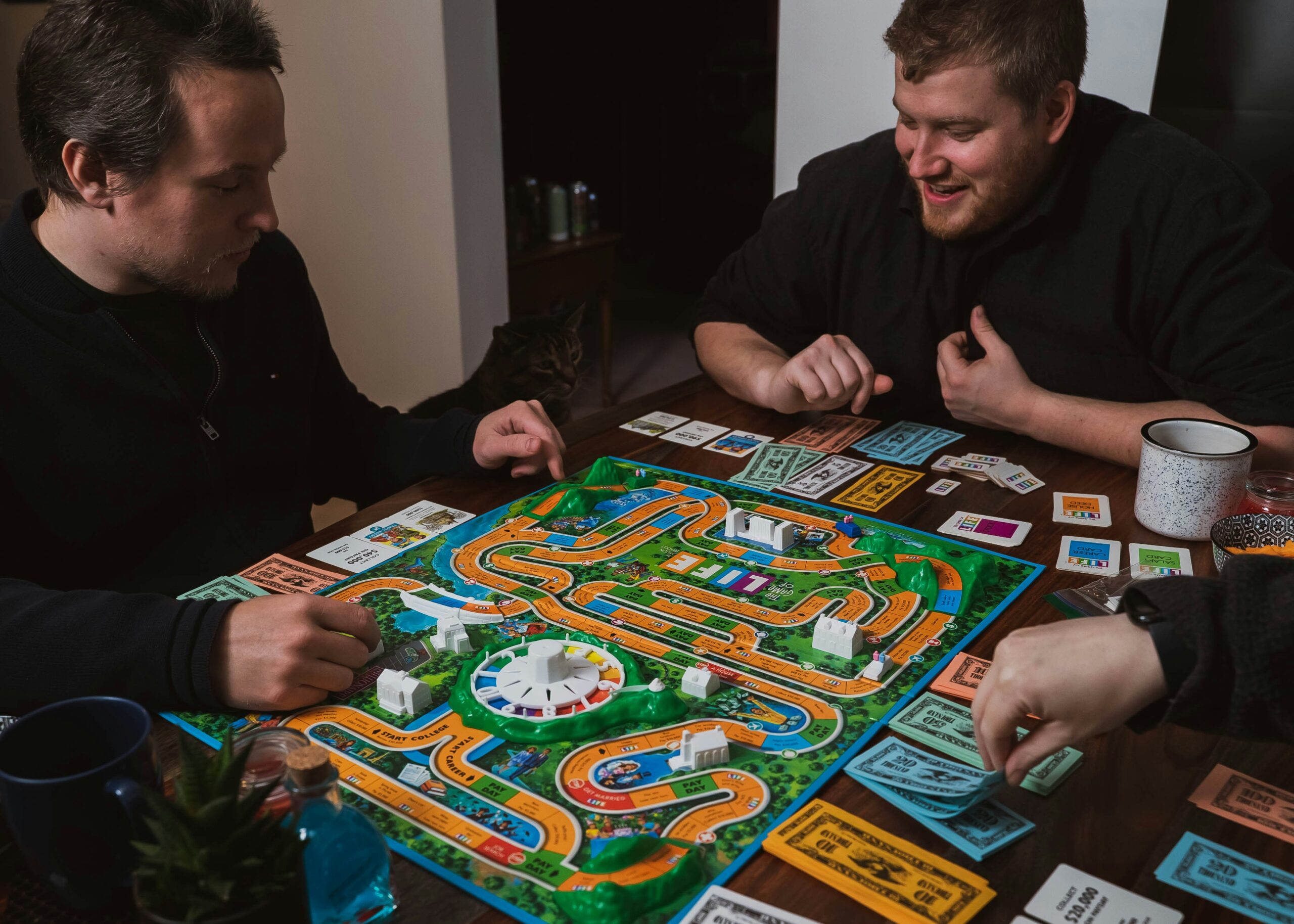
Photo: unsplash.com
Cork’s social life has long revolved around communal gatherings. The city’s pub culture, close-knit neighbourhoods, and a well-established habit of spending time in other people’s company have made game nights a recurring fixture rather than an occasional novelty. If you gather enough people in a sitting room in Ballincollig or Douglas on a Friday evening, it wouldn’t be unusual for a board game to appear before midnight. What has shifted recently is what happens around that table, and increasingly, what replaces it altogether.
When the Board Stays in the Box
The rise of screen-based entertainment has not made traditional game nights obsolete in Cork. Instead, it has introduced alternatives that require no setup, no agreement on rules, and no minimum number of players. For households where schedules rarely align, the flexibility of digital formats carries an obvious practical advantage.
Within that broader digital shift, certain formats have transferred to screens without losing much of their essence in the process. Card games, strategy formats, and chance-based entertainment have all made the move convincingly. Online roulette, for example, shares much of the same rhythm as its physical counterpart – the uncertainty, the social element in live-dealer formats, and the game’s structured simplicity – while remaining accessible on a phone or laptop without requiring a trip anywhere. It sits within the category of digital entertainment that Cork residents increasingly browse alongside streaming services and casual gaming apps.
The Hybrid Evening
More telling than the shift itself is how many households in Cork have settled into a hybrid format rather than making a clean break from either approach. A game night might open around a table with something familiar before moving toward a shared screen for a quiz app or multiplayer game and then gradually giving way to individuals using their own devices in the same room. It is a looser structure than a traditional game night, but it’s one that reflects how entertainment consumption actually works for most people now.
Board game cafés in Cork, including venues in the city centre that have grown steadily in popularity over recent years, suggest that the appetite for physical, social gaming remains strong. The fact that there are dedicated spaces for it points to a deliberate effort to give the format a setting where it can thrive, recognising that it no longer happens organically at home as much as it once did.
Screens as Social Infrastructure
Framing the move toward screens as a retreat from sociability misses an important aspect of how Cork residents actually use these games. Multiplayer games, whether they are competitive or cooperative, generate shared experiences that are not fundamentally different from sitting around a table. The screen changes the format without necessarily diminishing the qualities that make game nights worth having in the first place.
Local gaming communities in Cork have also grown through digital channels, with groups now organising regular sessions via social media and platforms like Discord. This model had no practical equivalent a generation ago. The game night culture that has emerged from all of this technology is broader and more varied than before, drawing in people who might never have gathered around a physical board and keeping the habit alive in forms that continue to evolve.