
5 June 2026
By Elaine Murphy
elaine@TheCork.ie
Minister of State Timmy Dooley and senior officials this week visited the Marine Institute’s research vessel, the RV Tom Crean, to mark a significant new phase of investment in Ireland’s
INFOMAR seabed mapping programme and to highlight the critical role of marine data in delivering national policy priorities.
The visit, held in Cork alongside the Fair Seas Conference, emphasised how State investment in ocean observation and data is directly enabling Ireland to advance key objectives in marine resource
management, marine protection, climate action, and offshore renewable energy development.
A Whole-of-Government Approach The visit underscored the close collaboration between the Marine Institute, the Department of Agriculture, Food and the Marine (DAFM), and the Department of Climate, Energy and the Environment (DCEE) in delivering Ireland’s marine agenda. By aligning scientific capability with policy development, this partnership ensures that Ireland’s marine resources are managed in a coordinated, sustainable and
strategic way.
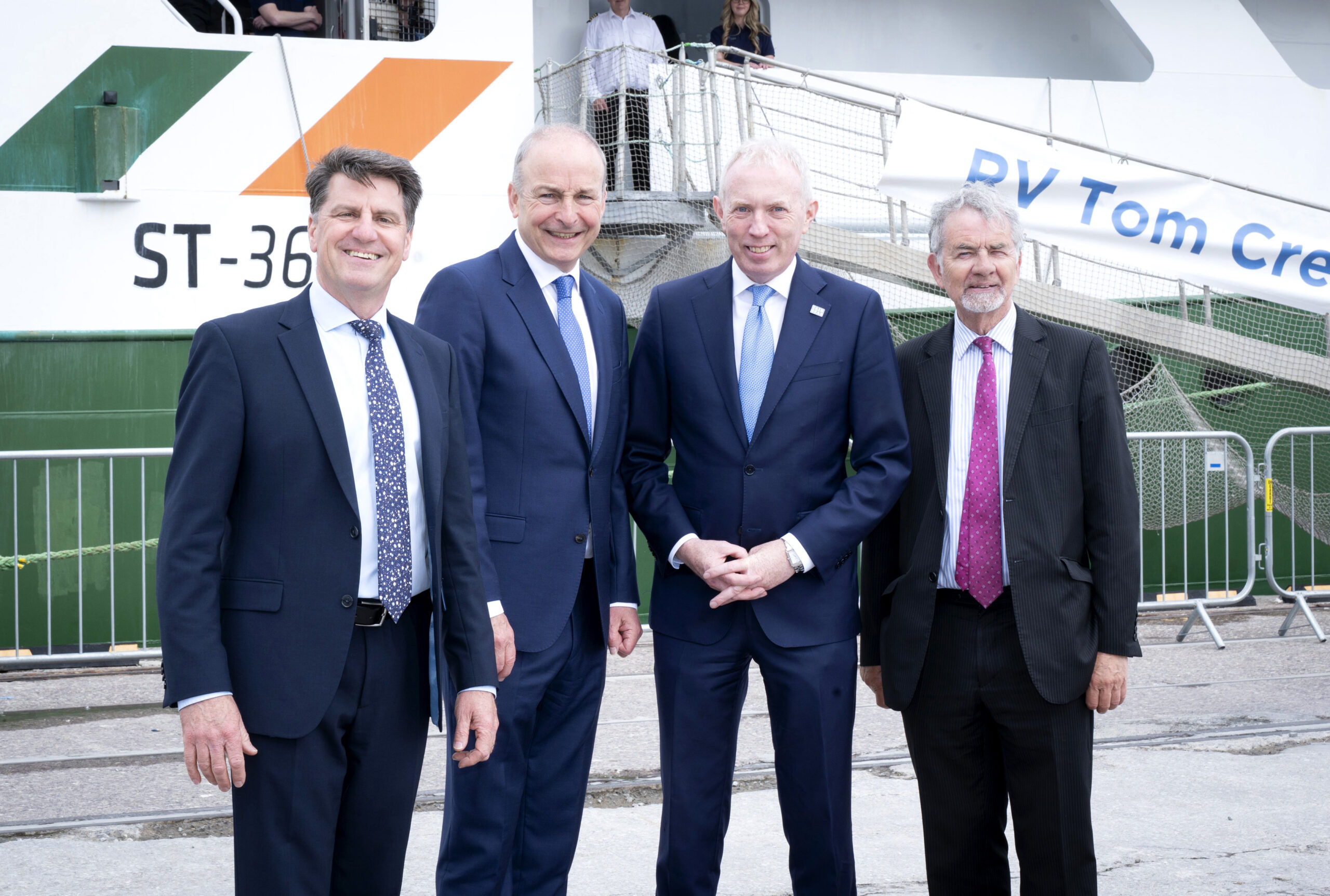
Free Pics No Repro Fee if used within two weeks and in conjunction with the story below, dated 3 June 2026
Dr Rick Officer CEO Marine Institute, An Taoiseach Micheál Martin, Timmy Dooley Minister of State Department of Agriculture, Food and the Marine and Martin Hayden Chairperson Marine Institute, Minister of State Timmy Dooley and senior officials today visited the Marine Institute’s research vessel, the RV Tom Crean, to mark a significant new phase of investment in Ireland’s INFOMAR seabed mapping programme and to highlight the critical role of marine data in delivering national policy priorities.
Photography by Gerard McCarthy Photography 087 8537228
More Info Contact Sinead Coyne hello@minimedia.ie
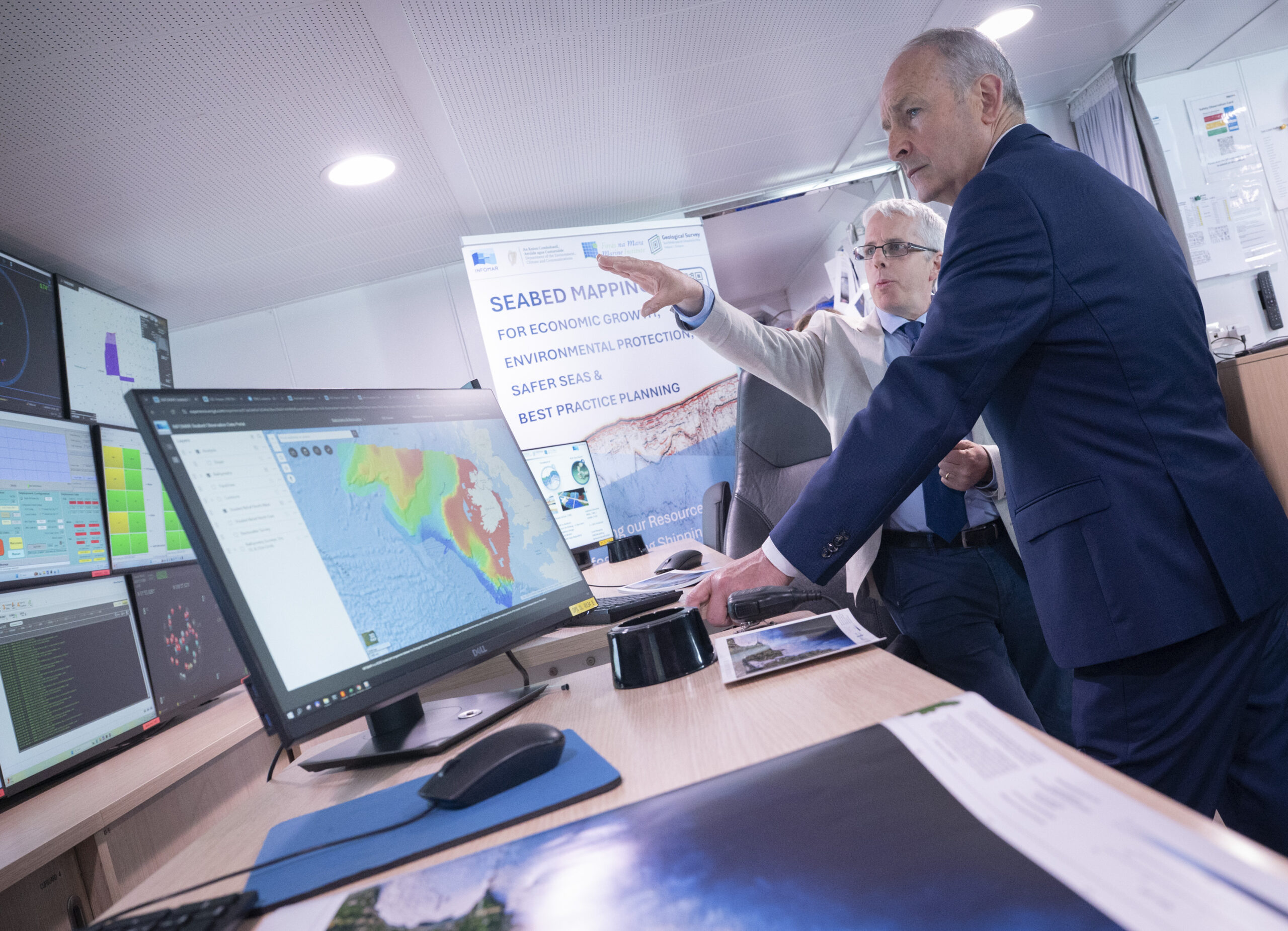
Thomas Furey, Joint Programme manager Infomar, Marine Institute and An Taoiseach Micheál Martin ,Minister of State Timmy Dooley and senior officials today visited the Marine Institute’s research vessel, the RV Tom Crean, to mark a significant new phase of investment in Ireland’s INFOMAR seabed mapping programme and to highlight the critical role of marine data in delivering national policy priorities.
Photography by Gerard McCarthy
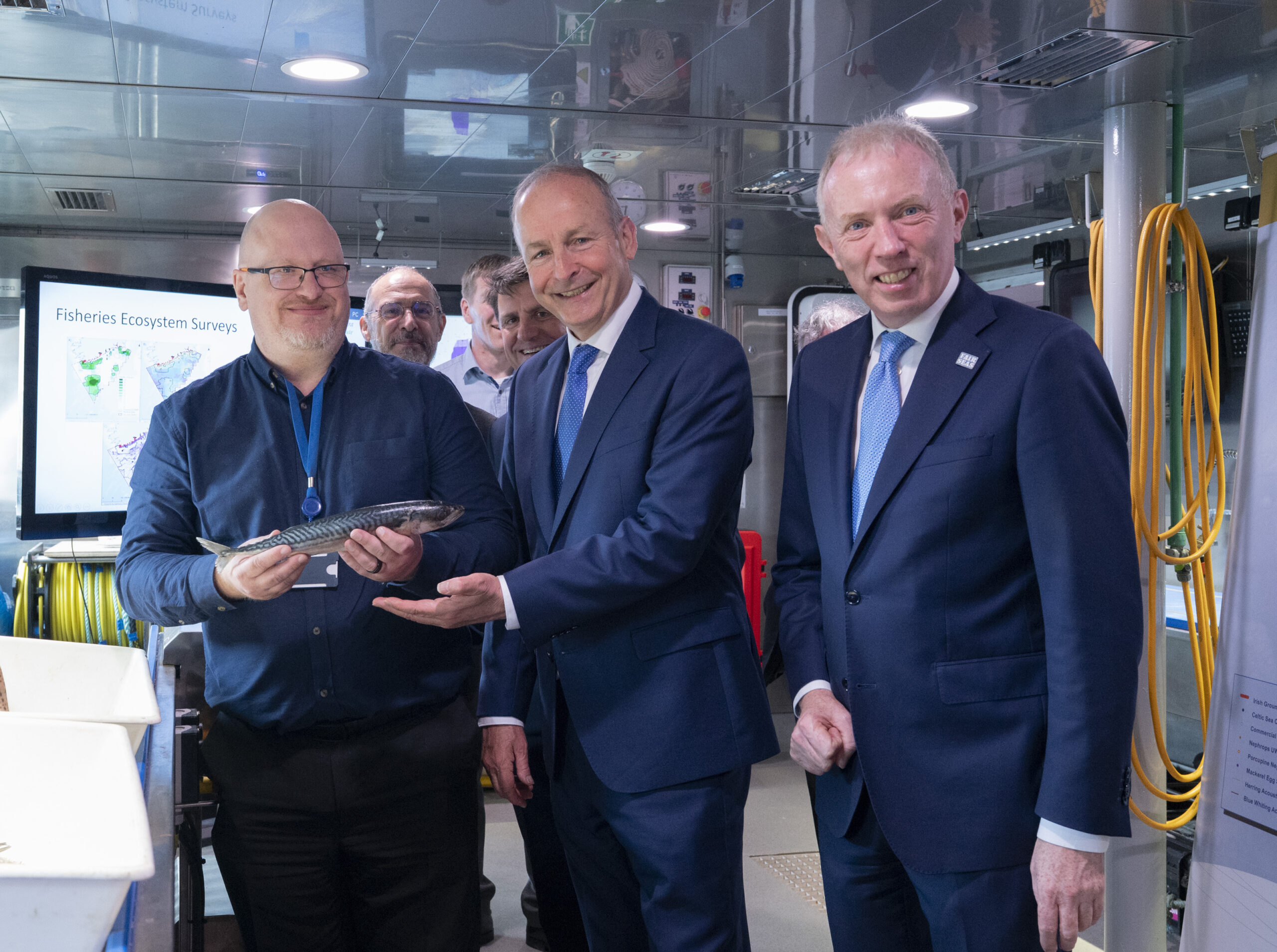
Graham Johnston, Marine Institute, Dr Rick Officer CEO Marine Institute , An Taoiseach Micheál Martin and Timmy Dooley Minister of State Department of Agriculture, Food and the Marine ,Marine Science in action data collected at sea supporting sustainable fisheries and marine protection ,Minister of State Timmy Dooley and senior officials today visited the Marine Institute’s research vessel, the RV Tom Crean, to mark a significant new phase of investment in Ireland’s INFOMAR seabed mapping programme and to highlight the critical role of marine data in delivering national policy priorities.
Photography by Gerard McCarthy
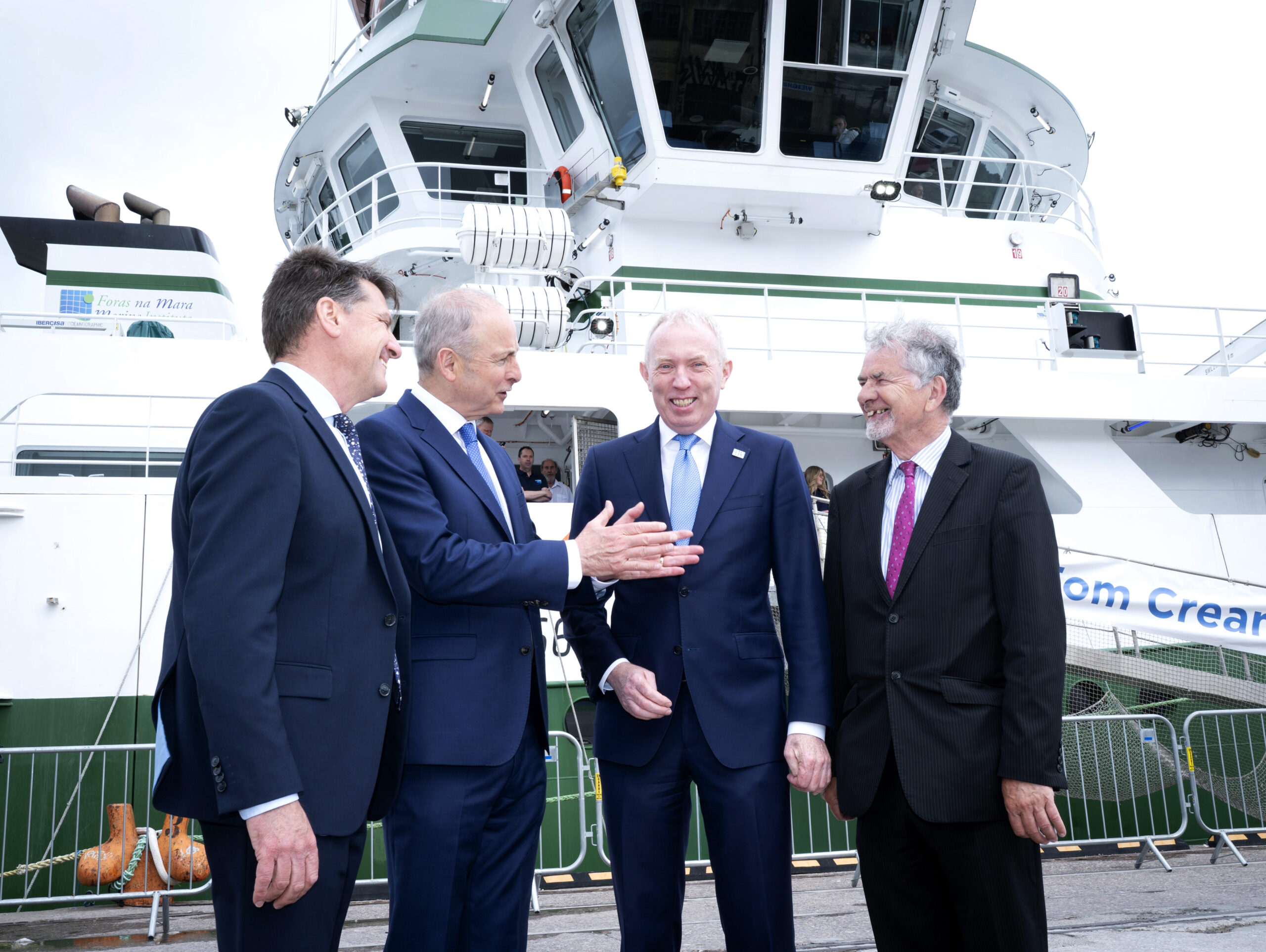
Dr Rick Officer CEO Marine Institute, An Taoiseach Micheál Martin, Timmy Dooley Minister of State Department of Agriculture, Food and the Marine and Martin Hayden Chairperson Marine Institute, Minister of State Timmy Dooley and senior officials today visited the Marine Institute’s research vessel, the RV Tom Crean, to mark a significant new phase of investment in Ireland’s INFOMAR seabed mapping programme and to highlight the critical role of marine data in delivering national policy priorities.
Photography by Gerard McCarthy
Speaking at the event, Minister Timmy Dooley said: “The extension of INFOMAR is a clear demonstration of the Government’s commitment to placing data and evidence at the heart of how we manage our marine resources.
This investment strengthens Ireland’s ability to deliver on key national priorities, including marine protection, climate action and offshore renewable energy. It also reflects the strong collaboration across Government, working together to ensure our ocean is managed in a sustainable, strategic and forward-looking way.”
Dr Rick Officer, CEO of the Marine Institute, said: “What we are seeing today is the power of joined-up thinking, where investment in marine science directly enables Government to deliver on its priorities. Our research vessels and programmes like INFOMAR provide foundational data and evidence that support priorities such as resource sustainability, biodiversity protection and offshore renewable energy. This is about
ensuring Ireland’s ocean is managed sustainably, based on the best available science, for the benefit of society, the economy and the environment.”
INFOMAR at the Centre of Ireland’s Ocean Strategy
A central focus of the visit was the Government announcement to extend funding for the INFOMAR programme for a further three years (2027–2029), reinforcing Ireland’s position as a global leader in
seabed mapping and marine data.
INFOMAR has already transformed how Ireland understands and manages its seabed, delivering benefits across multiple sectors including:
Enabling sustainable fisheries and aquaculture through seabed mapping
Providing critical data for safe navigation, shipping and marine infrastructure
Supporting offshore renewable energy site identification, surveying and auction readiness
Supporting heritage protection and environmental risk management
Contributing to the expansion of Ireland’s offshore protected areas from 3% to 10%
Building on its globally recognised seabed mapping programme, INFOMAR is now evolving beyond mapping to deliver a new generation of ocean intelligence, enhancing long-term data collection and integration across Government. In its next phase, the programme will develop time-series of seabed and habitat data to track environmental change, expand subsurface geophysical and geotechnical data for offshore infrastructure, support the design and siting of offshore wind and energy systems, enable cross-government data integration for marine policy and planning, and define Ireland’s long-term ocean data strategy for the decade ahead.
Welcoming the announcement, Thomas Furey, Manager, Advanced Mapping Services, Marine
Institute, said: “INFOMAR has fundamentally transformed Ireland’s understanding of its seabed, delivering real and lasting benefits across biodiversity protection, marine planning, and economic development.
The extension of this programme represents a strategic investment in Ireland’s future, enabling us to move from mapping our seabed to actively managing it. By building a richer, time-based
and integrated ocean data system, INFOMAR will underpin sustainable fisheries, stronger marine protection, and the responsible expansion of offshore renewable energy, ensuring
Ireland remains a global leader in ocean knowledge and stewardship.”
Science driving National Policy and Climate Action
At the core of the visit was a clear message: High-quality marine data and evidence are essential to effective policy delivery. Engagements on board the RV Tom Crean demonstrated how data collected at
sea translates directly into national policy, investment decisions, and regulatory frameworks. This reinforces the role of marine science as a critical enabler of Ireland’s environmental and economic objectives.
Briefings illustrated how marine data is actively informing marine spatial planning and offshore renewable energy policy, including the National Designated Maritime Area Plan; the evidence-based
designation of Marine Protected Areas; the integration of ecological, fisheries and spatial data into decision-making; and the delivery of Ireland’s commitments under the Marine Strategy Framework
Directive.
By bringing Government leaders directly onto a working research vessel, the visit provided a real-time connection between scientific capability and policy outcomes, highlighting the importance of sustained investment in ocean observation systems. As Dr Rick Officer, CEO of the Marine Institute, added: “Today’s visit brings Government leaders directly onto the platform where science happens. The RV Tom Crean and RV Celtic Explorer are critical national assets generating the data that informs policy, supports our seafood sector, protects marine biodiversity, and enables offshore renewable energy. This is about turning world-class science into tangible outcomes for Ireland’s environment, economy, and society.”